Company
Role
Product Designer, Researcher
Project Type
Timeline
2023 - 2024
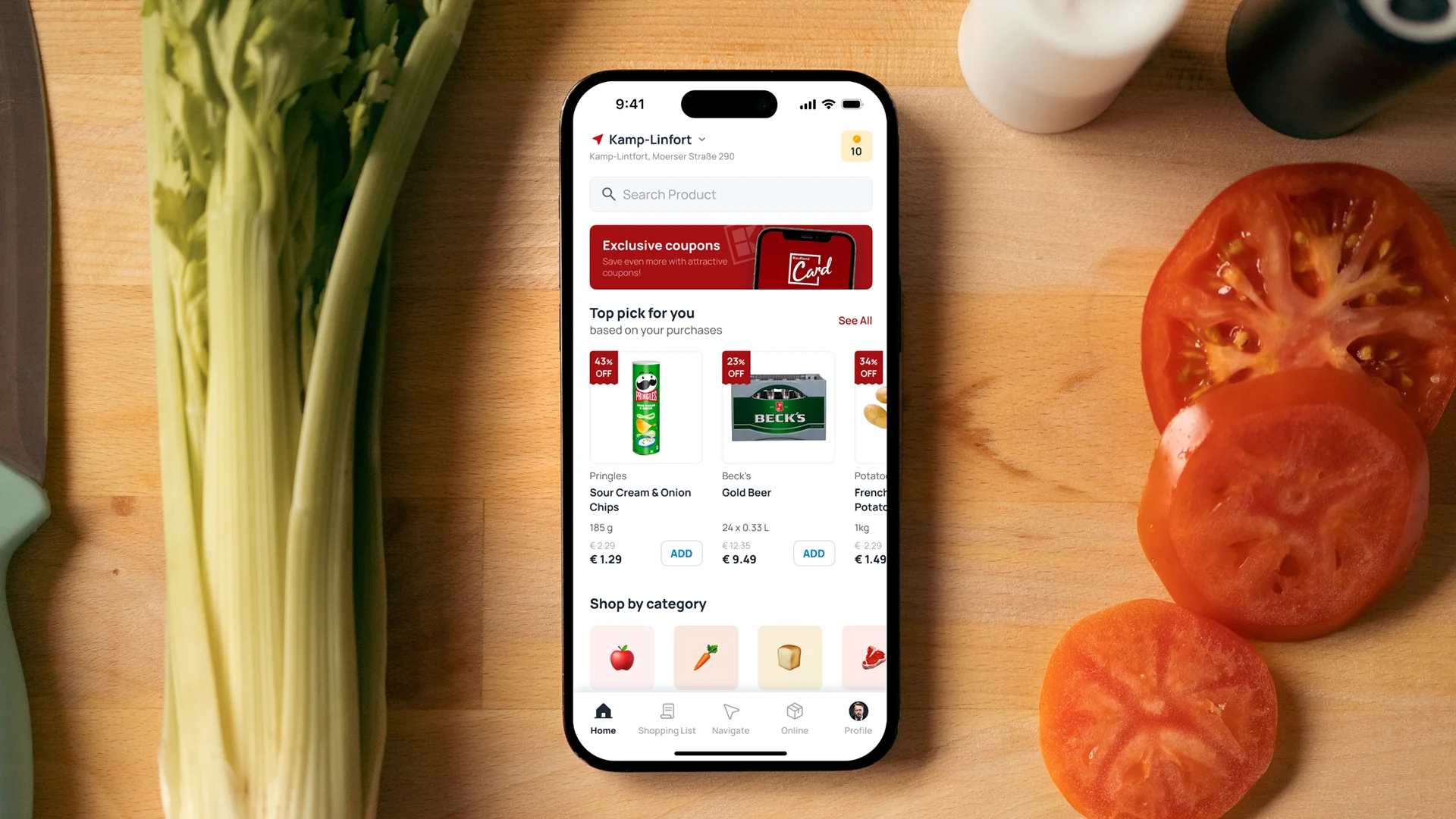
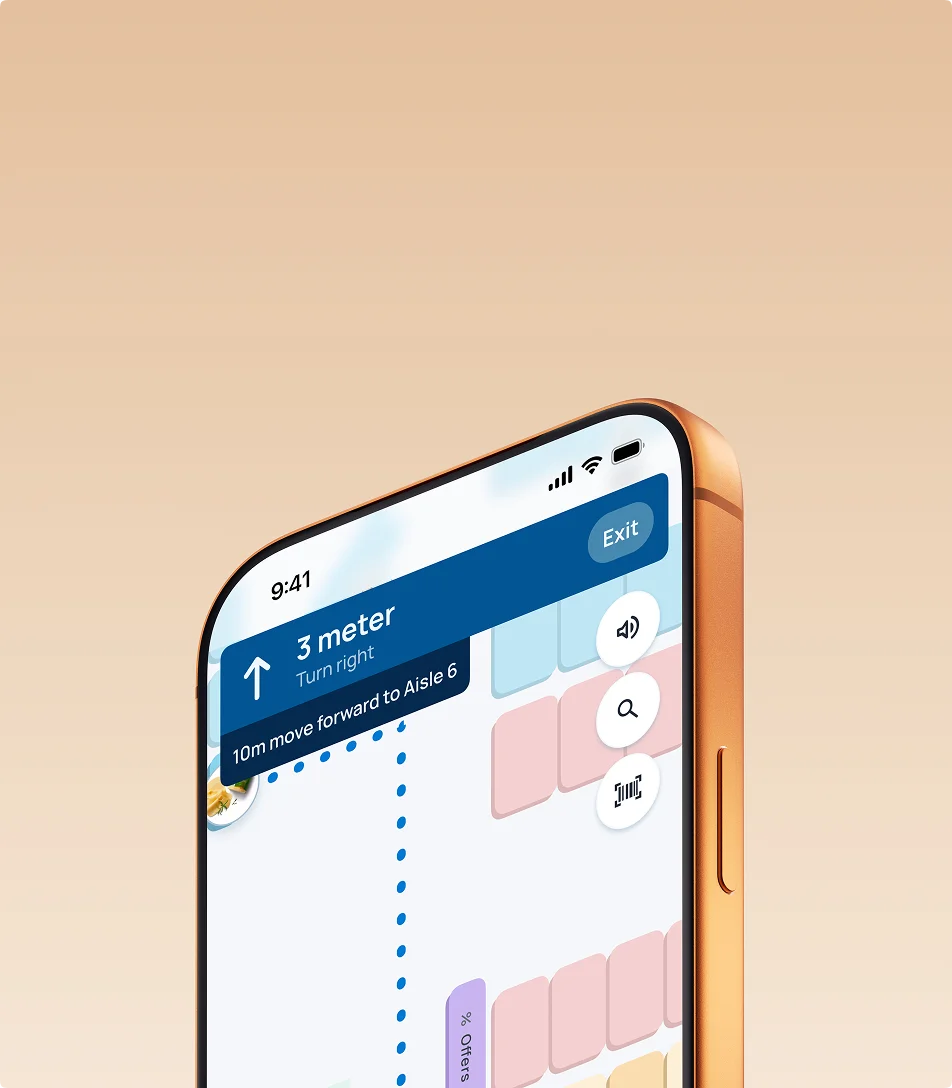
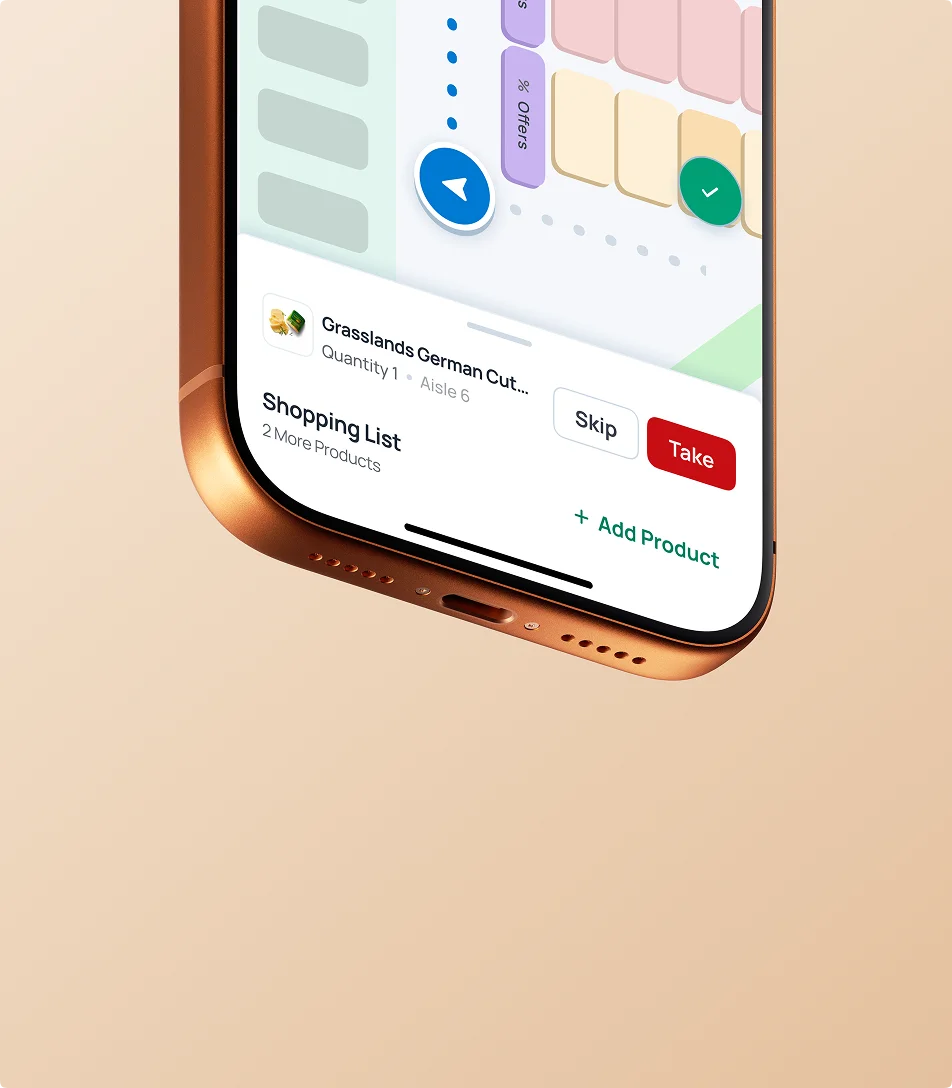
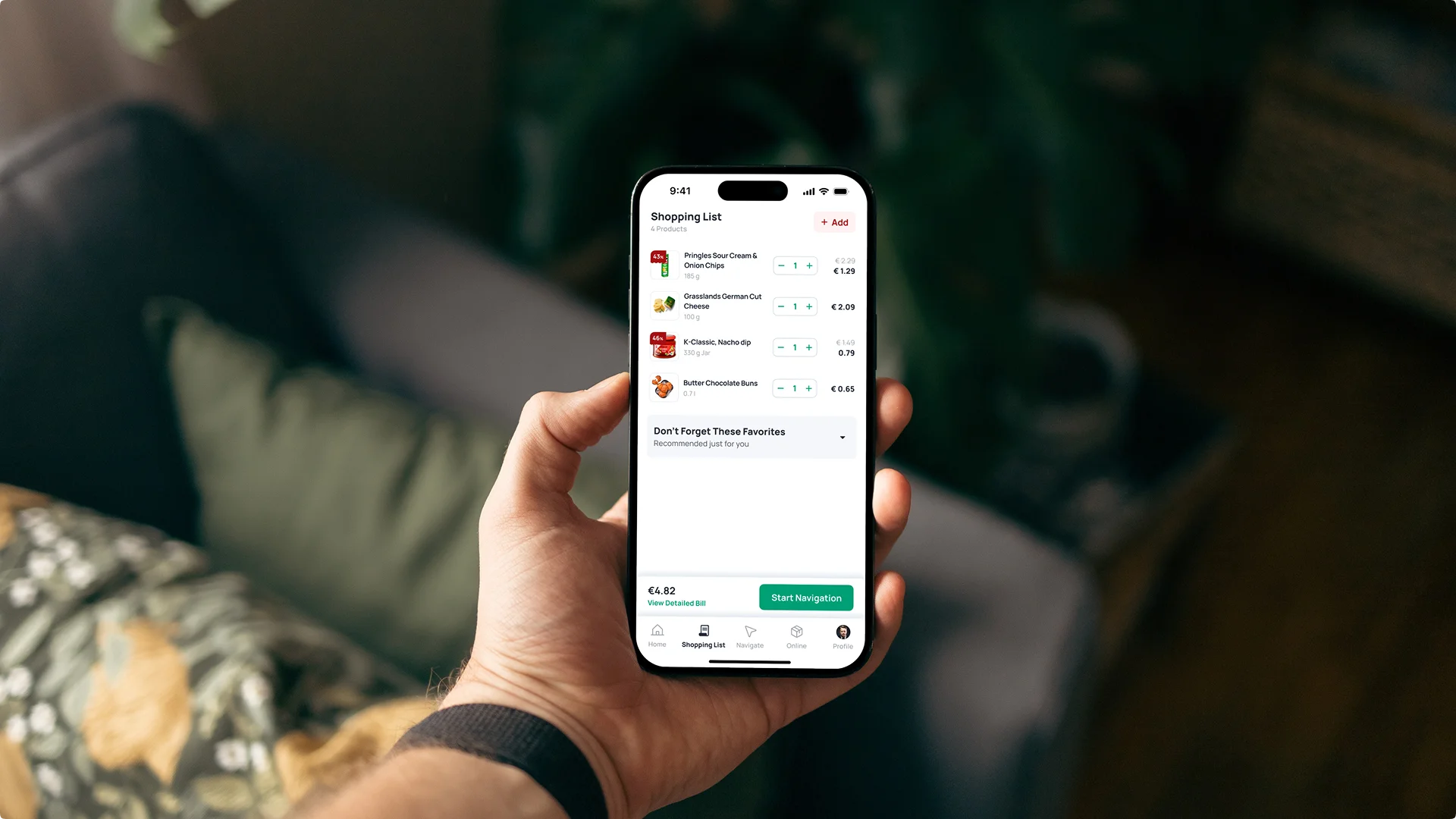
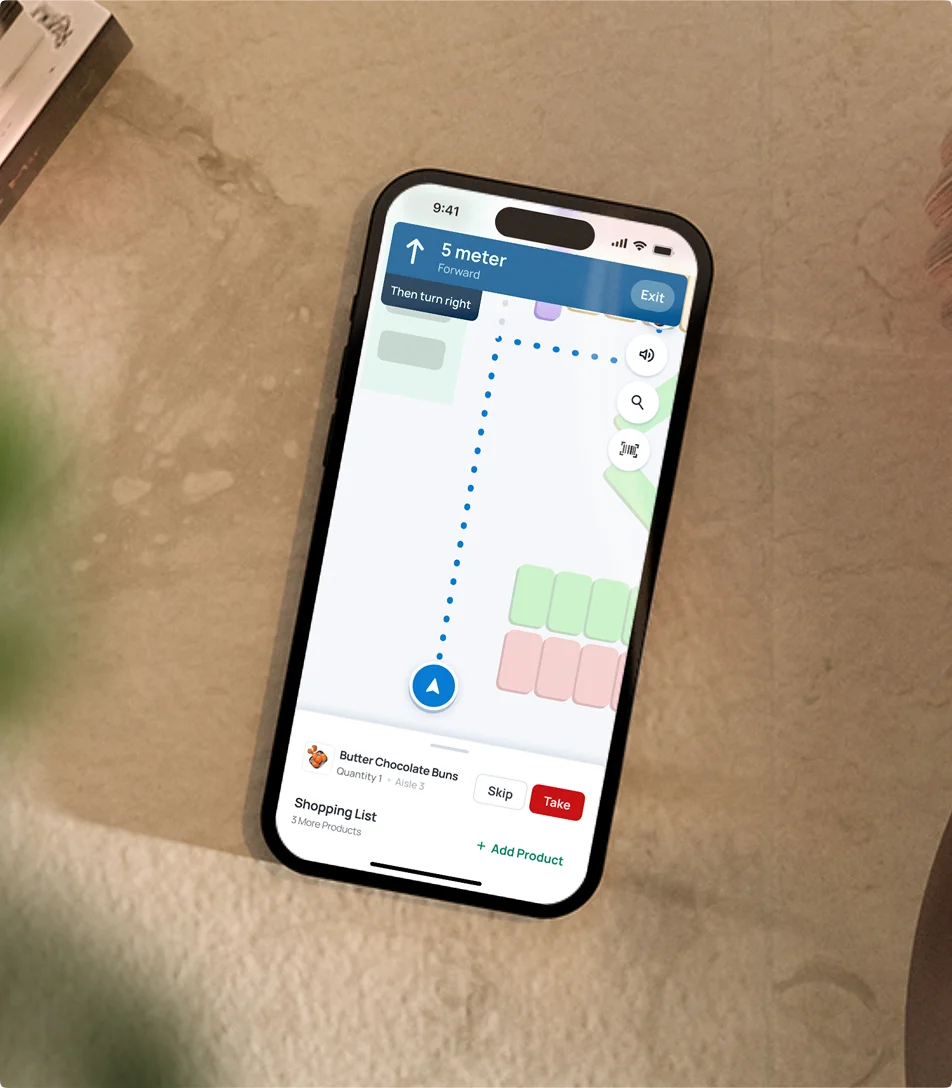
There was no collaboration with Kaufland; all research, concept development, and testing were done independently for my Master’s in Usability Engineering.
This academic project treated a real product problem using Kaufland as a setting to study how people shop in unfamiliar supermarkets, especially with language barriers. The problem is real, with behaviors, friction, and insights drawn from actual shopping experiences, not hypotheticals.
We explored a supermarket navigation experience designed around how people actually shop — moving through aisles, picking items, comparing products, and constantly switching attention.
The project began as a mobile-first concept. But as testing progressed, the real opportunity became clearer:
The problem was not only navigation, it was using navigation while shopping.
Impact:
20%
Faster shopping trip
100%
Preferred across all participants
0
Usability breakdowns
THE PROBLEM
Shopping in an unfamiliar supermarket is a physical task with constant movement, comparison, translation, and decision-making. For international shoppers, that friction grows quickly.
Indoor navigation is becoming more relevant as retail environments grow more complex and users increasingly depend on their phones inside stores. But most solutions don’t account for how people actually shop. We treated this as a real product problem — not just a feature to add. The core question wasn’t “how do we design a better app?” It was:
How do we support navigation without interrupting the act of shopping?
THE APPROACH
01
Understand the system
We researched shoppers in real stores, where friction actually sits. The research combined theory, industry and market analysis, competitor review, interviews, and in-store observation.
02
Phones were already part of the behavior
Shoppers were already using their phones in-store, but in a scattered way—checking lists, translating names, and navigating unfamiliar layouts. This made a mobile concept a natural starting point.
03
Shaping the first product direction
We designed the initial concept around the main shopping flow: finding products, locating them, and managing the trip without needing memory or staff help.
These insights shaped flows and a design system that fit the Kaufland app, keeping the experience simple, organised, and easy to scan on the go.
04
Validating the mobile-first approach
Testing the first version confirmed the direction: users could navigate, search, and complete tasks clearly. The system worked as planned. But the real-world context still created friction. That was the turning point.
THE BREAKING POINT
During testing, we watched people use the app while shopping. They held the phone. Moved through aisles. Reached for products. Tried to stay oriented.
The phone became a third task in a two-handed environment.
The app was useful. But the context of using it wasn't. That observation shifted everything. Instead of asking "how do we improve the interface?" we asked something harder:
What if the user didn’t have to hold the phone at all?
The answer wasn't another design iteration. It was a different interaction model entirely
VALIDATION
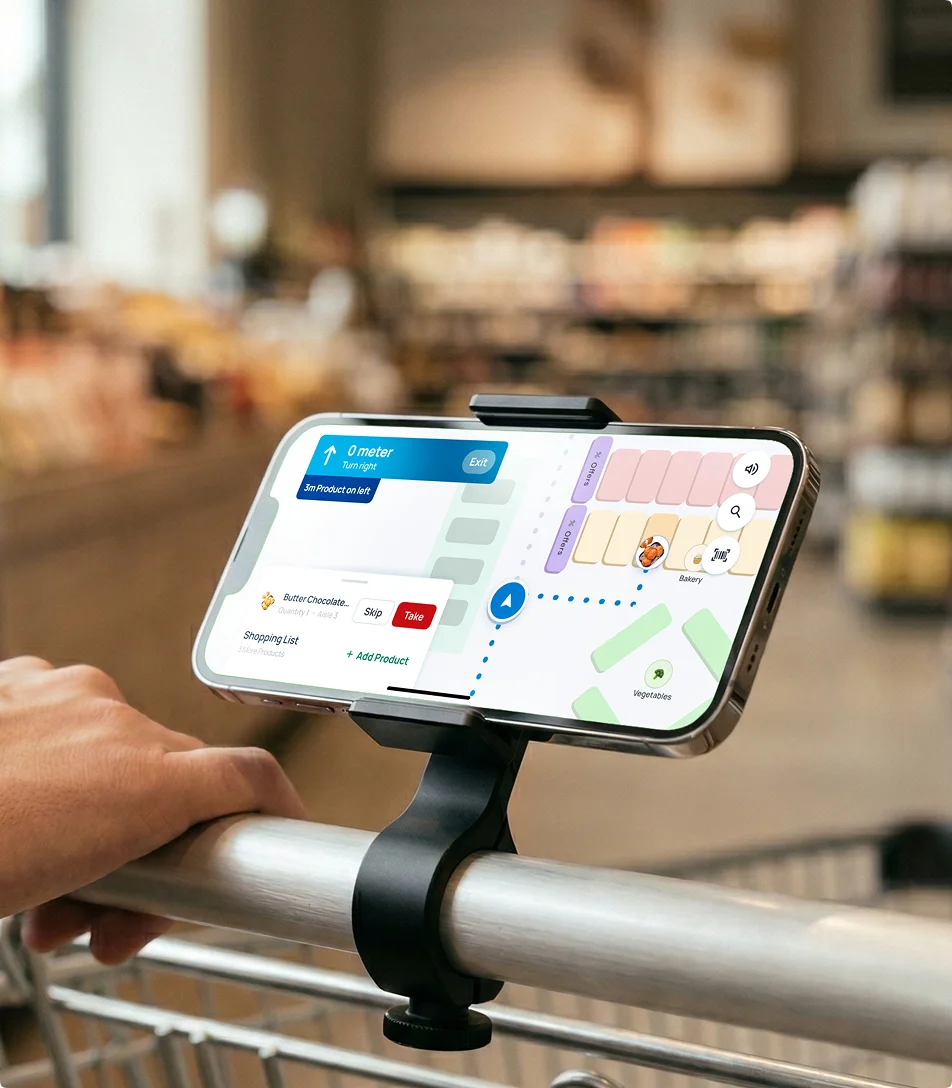
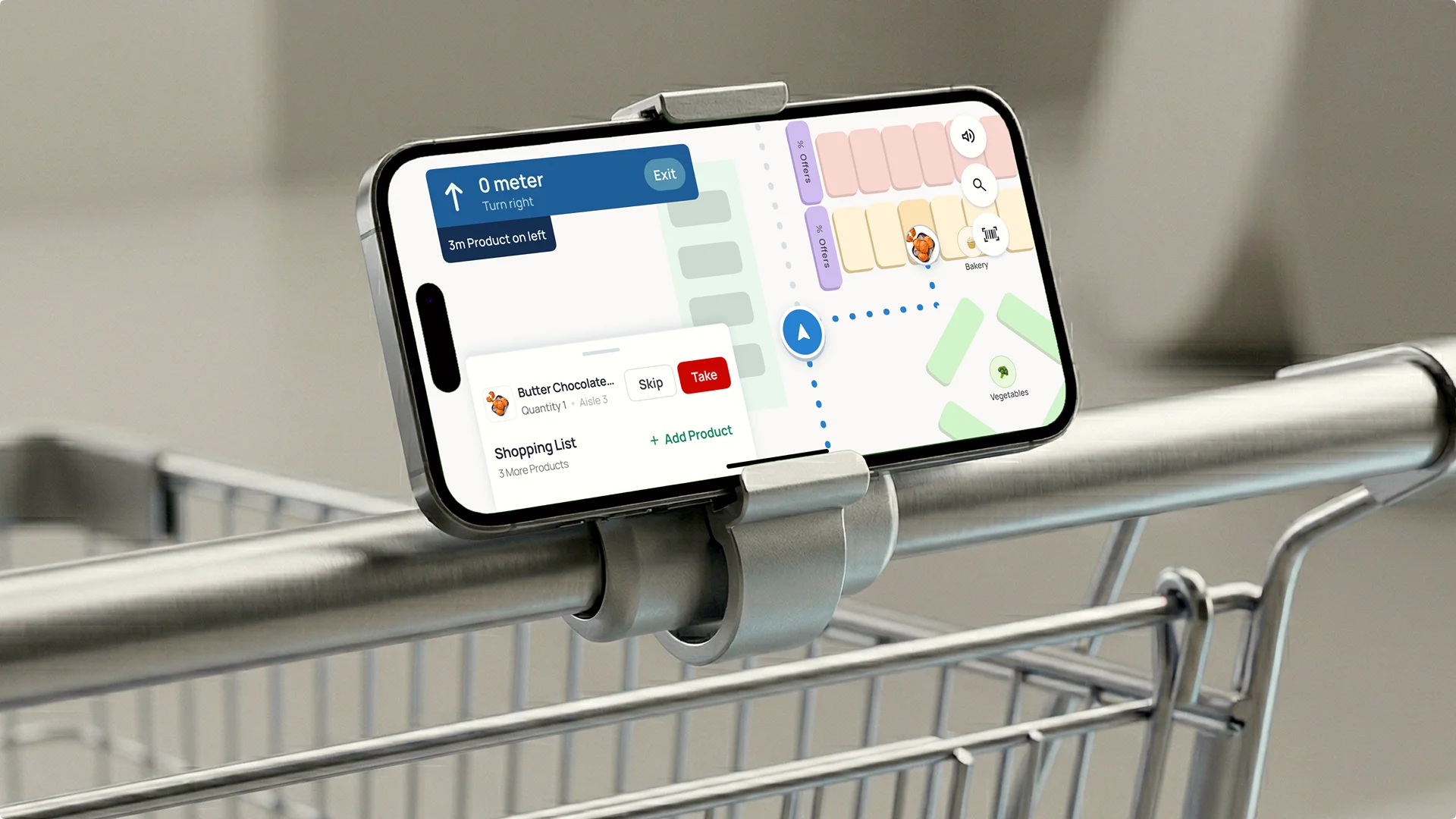
What if the phone was on the trolley instead of in their hand? Not a hardware innovation. A product decision based on context.
We created a hands-free version—same interface, same functionality, same design system. Just mounted on the trolley at arm's length.
Then we tested both side-by-side. The results was hands-free navigation performed better:
20% faster shopping trip
100% of participants preferred the hands-free version
Hands-free app completed all tasks successfully
But the real number was simpler: the experience became effortless. One participant said:
“This app is a real time-saver. Easy to find products without relying on staff. Always wanted an app like this.”
THIS REVEALED
Good product design isn't about making beautiful interfaces.
It's about understanding where people actually interact, and designing for that context, not an imagined one.
By validating the idea where users would actually use it—hands-free on a moving trolley—we proved something larger: context of use changes everything.
The interface was identical. The design system was identical. But the moment we removed "holding the phone" from the equation, the product became intuitive.
MY ROLE
I led the research direction, shaped the navigation concept, and drove the design decisions. But my core contribution was the transition point: translating research findings into a product hypothesis instead of accepting the obvious solution.
When testing revealed the friction, I asked the uncomfortable question: What if we're solving the wrong problem? That question led to everything that followed.
WHAT I LEARNED
“The strongest ideas are rarely the most complex. They're the ones that match how people actually move, work, and decide.”
I started thinking about a navigation app. I ended thinking about context, behavior, and how products actually fit into people's lives.
This is what made the project valuable to me as a designer: not the validation, but the principle it reinforced.